The Growing Concern of Counterfeit Products
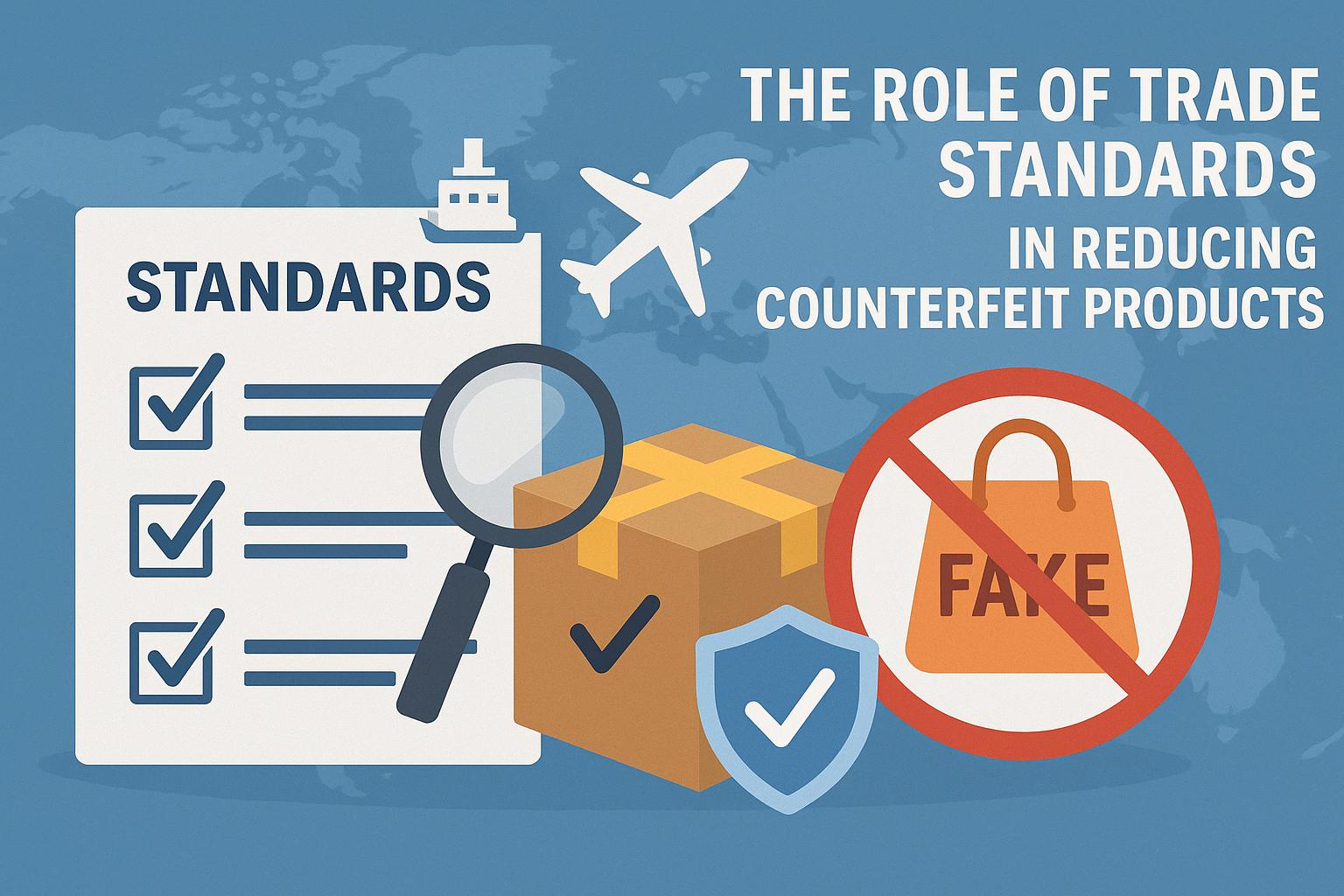
Counterfeit products have become a significant issue in global markets, affecting industries ranging from pharmaceuticals to electronics. These fake goods not only harm legitimate businesses but also pose risks to consumer safety. Trade standards emerge as vital tools in combating this pervasive problem, offering frameworks to verify the authenticity of products and safeguard various stakeholders in the supply chain.
Understanding Trade Standards
Trade standards are agreed-upon criteria within various industries, providing guidelines for product quality, safety, and interoperability. They are developed by international bodies such as the International Organization for Standardization (ISO) and are crucial in facilitating global trade. These standards not only enhance consumer trust but also reduce technical barriers to trade.
Standards form the backbone of trust in commercial exchanges, ensuring consumers that products meet specific criteria for quality and safety. The development of these standards involves input from industry experts, consumer groups, and regulatory bodies to ensure they are comprehensive and relevant. This collaborative effort results in a set of guidelines that are recognized globally, providing a universal language for quality assurance. Businesses that adhere to these standards can distinguish themselves in the marketplace as reliable and committed to upholding consumer interests.
Role of Trade Standards in Authentication
Trade standards play a pivotal role in product authentication. By enforcing rigorous quality checks and certification processes, standards help ensure that products meet specific safety and quality benchmarks. Organizations implement these quality assurance protocols to distinguish authentic products from counterfeit ones, benefiting both consumers and manufacturers.
The authentication process involves multiple steps, including pre-market testing, labeling, and continuous surveillance of products in the market. This process helps maintain the integrity of the supply chain and ensures that consumers receive only legitimate goods. Moreover, authentication under trade standards often requires documentation that can be traced back to the point of origin, further confirming the product’s legitimacy. This traceability is crucial in identifying counterfeiters and taking appropriate action against them.
Technological Integration
The integration of technology in trade standards adds another layer of defense against counterfeit products. For instance, the use of RFID (Radio-Frequency Identification) and blockchain technology in supply chain management offers traceability and transparency. GS1, an international standards organization, provides standards that enable the use of these technologies, allowing real-time tracking of products. This level of oversight makes it increasingly difficult for counterfeit items to infiltrate legitimate supply channels.
Technological integration has revolutionized the way trade standards are enforced. RFID technology tags products with unique identifiers, which can be scanned at various points in the supply chain to verify authenticity. Similarly, blockchain technology creates immutable records of transactions, providing an unalterable history of a product’s journey from manufacturer to retailer. Such technological innovations are not only aiding in the detection of counterfeit goods but are also helping to prevent their production by offering robust tracking and reporting mechanisms.
Global Collaboration
Combating counterfeit products requires global cooperation, with trade standards serving as the common language. International agreements and frameworks, such as those facilitated by the World Trade Organization (WTO), ensure that countries adhere to uniform regulations. This global commitment amplifies the effectiveness of trade standards, making it harder for counterfeit goods to evade detection.
Countries must work together to implement and enforce these standards consistently. This collaboration ensures that counterfeit products cannot exploit regulatory discrepancies between nations. Additionally, shared databases facilitated by organizations like the WTO allow for the swift exchange of information regarding counterfeit trends and patterns, enabling quicker responses and coordinated actions. The results are a more resilient international trade system capable of resisting the pressures of counterfeit operations.
Challenges and Future Directions
Despite the benefits, there are challenges in enforcing trade standards across different regions. Variations in local laws and enforcement mechanisms can create gaps that counterfeiters exploit. To address this, there is a continued need for international collaboration and innovation in standard-setting processes.
Local governments and industry players must harmonize regulations to ensure coherence in the enforcement of trade standards. Addressing these regional disparities involves negotiating trade agreements that incorporate consistent standards and ensuring that enforcement mechanisms are robust and well-resourced.
Looking forward, advancements in digital technologies offer promising avenues for enhancing the role of trade standards. The development of dynamic and adaptive standards that leverage artificial intelligence (AI) and machine learning could further strengthen the fight against counterfeit products. AI can analyze vast amounts of data to detect anomalies in supply chains that may indicate counterfeit activity. Machine learning algorithms can be trained to recognize patterns that precede the introduction of counterfeit goods, thus allowing for preemptive measures.
In conclusion, trade standards play a crucial role in reducing counterfeit products by ensuring product authenticity and enhancing global market integrity. Maintaining a reliable system of trade standards involves continual adaptation to new challenges and opportunities posed by technological advances. While challenges remain, ongoing innovations and international cooperation hold the potential to further safeguard industries and consumers alike. The dynamic nature of trade standards will continue to evolve, creating an environment where legitimate businesses can thrive and consumers can enjoy confidence in their purchases.