
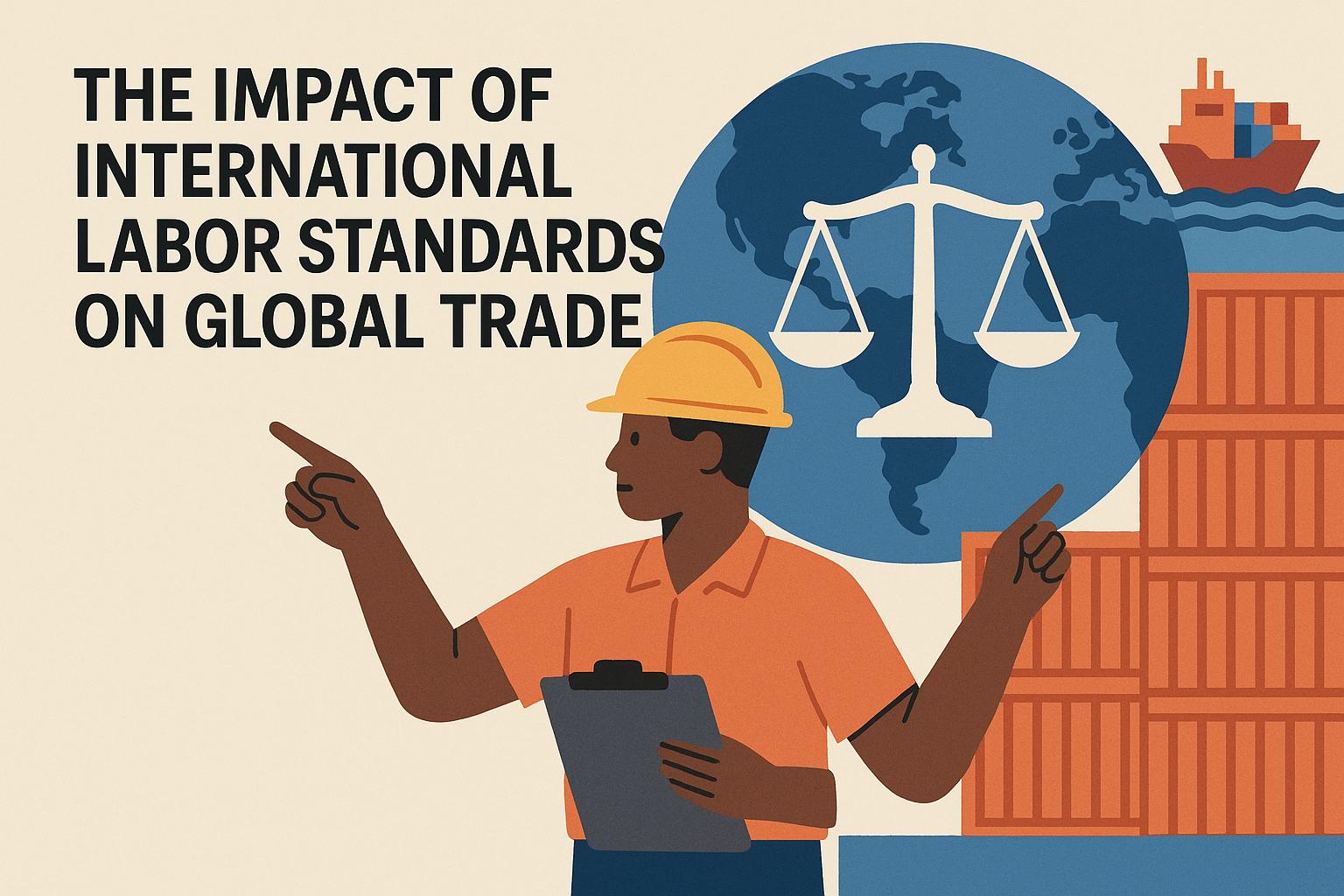
The Intersection of International Labor Standards and Global Trade
The complex and dynamic interplay between international labor standards and global trade has garnered the attention of various stakeholders including policymakers, businesses, and labor advocates. As the global economy becomes more interconnected, ensuring fair labor practices while maintaining competitive markets presents an important concern that resonates on a global scale.
Defining International Labor Standards
International labor standards are fundamentally about the principles and guidelines that have been put forth by organizations like the International Labour Organization (ILO). These standards serve multiple critical functions such as promoting rights at work, encouraging decent employment opportunities, enhancing social protection, and fostering constructive dialogue around work-related issues. It is important to understand that these standards cover a broad spectrum of topics.
Minimum wage levels: Ensuring that workers receive a fair and sustainable income for their labor is a primary concern. Minimum wage policies help in establishing a financial baseline for employees, which can mitigate poverty and improve living standards.
Working hours: Regulations around working hours aim to strike a balance between productivity and the well-being of workers. They help in preventing exploitation and ensuring that workers have time to rest, which is essential for both physical health and mental well-being.
Occupational safety and health: Providing a safe working environment is crucial for the prevention of workplace injuries and diseases. Adhering to safety norms not only protects workers but also enhances overall productivity by reducing downtime due to workplace accidents.
Child labor regulations: These regulations seek to eradicate child labor practices by setting age restrictions and ensuring that children have access to education as opposed to being forced into labor.
Despite the global efforts to standardize labor practices, adherence to these standards can vary significantly from one country to another. Variations often stem from differing levels of economic development and national priorities.
Global Trade and Labor Standards
Global trade concerns the exchange of goods and services across international borders and is primarily driven by the concept of comparative advantage. Countries engage in trade for products they can produce most efficiently compared to others. However, one of the challenges in trade liberalization is the possibility of initiating a “race to the bottom.” This phenomenon occurs when nations lower labor standards to attract foreign investments and bolster exports. Hence, the interplay between global trade and labor standards presents unique challenges and opportunities.
The Benefits of Adopting Labor Standards
Implementing labor standards offers both ethical and economic advantages that contribute to a sustainable trade environment. For instance, when workplace conditions are improved, the workforce becomes more productive. Increased productivity subsequently enhances a nation’s economic output.
Another advantage lies in the ethical appeal: A nation’s adherence to international labor standards can enhance its reputation. In today’s market, consumers are becoming increasingly conscious of ethical consumption, choosing products that are produced under fair labor conditions. This inclination towards ethical consumerism incentivizes countries to adhere to robust labor practices, as it makes their goods more attractive to these consumer segments.
The Challenges and Criticisms
Though there are clear benefits to adopting international labor standards, several challenges and criticisms also need to be addressed. For many developing countries, strict adherence to these standards could impose substantial economic burdens. Such requirements could potentially erode the competitive advantage that these countries possess in the global market due to their generally lower labor costs.
Critics often argue that developed countries might use labor standards as a form of protectionism. This critique highlights the risk of such standards being perceived, or used, as tools to limit the competitive gains of less developed nations instead of genuinely improving labor conditions globally.
The Role of Trade Agreements
Trade agreements have taken on an increasingly significant role in integrating labor standards into the global trading framework. Modern agreements, such as the United States-Mexico-Canada Agreement (USMCA), make a point of incorporating labor conditions. The objective is to ensure fair competition and provide a framework that mitigates the detrimental effects associated with globalization, while at the same time promoting sustainable development.
Enforcement and Monitoring
The integration of labor standards into trade policies is one part of the equation; equally important is ensuring their effective enforcement and monitoring. Various mechanisms have been put in place to oversee compliance, which may include dispute resolution bodies and the imposition of direct sanctions. Despite these measures, ensuring adherence presents a formidable challenge. Robust institutional frameworks, coupled with international cooperation, are critical to this effort.
Conclusion
In conclusion, the impact of international labor standards on global trade extends deep into multiple facets of economic and social frameworks. The task of aligning economic growth objectives with fair and equitable labor practices continues to be a challenging, ongoing endeavor. As the discourse around globalization evolves, achieving a balance between competitive trade policies and fair labor standards remains a key objective for the international community. For those interested in delving deeper into related topics, further resources can be accessed through the International Labour Organization’s page.