
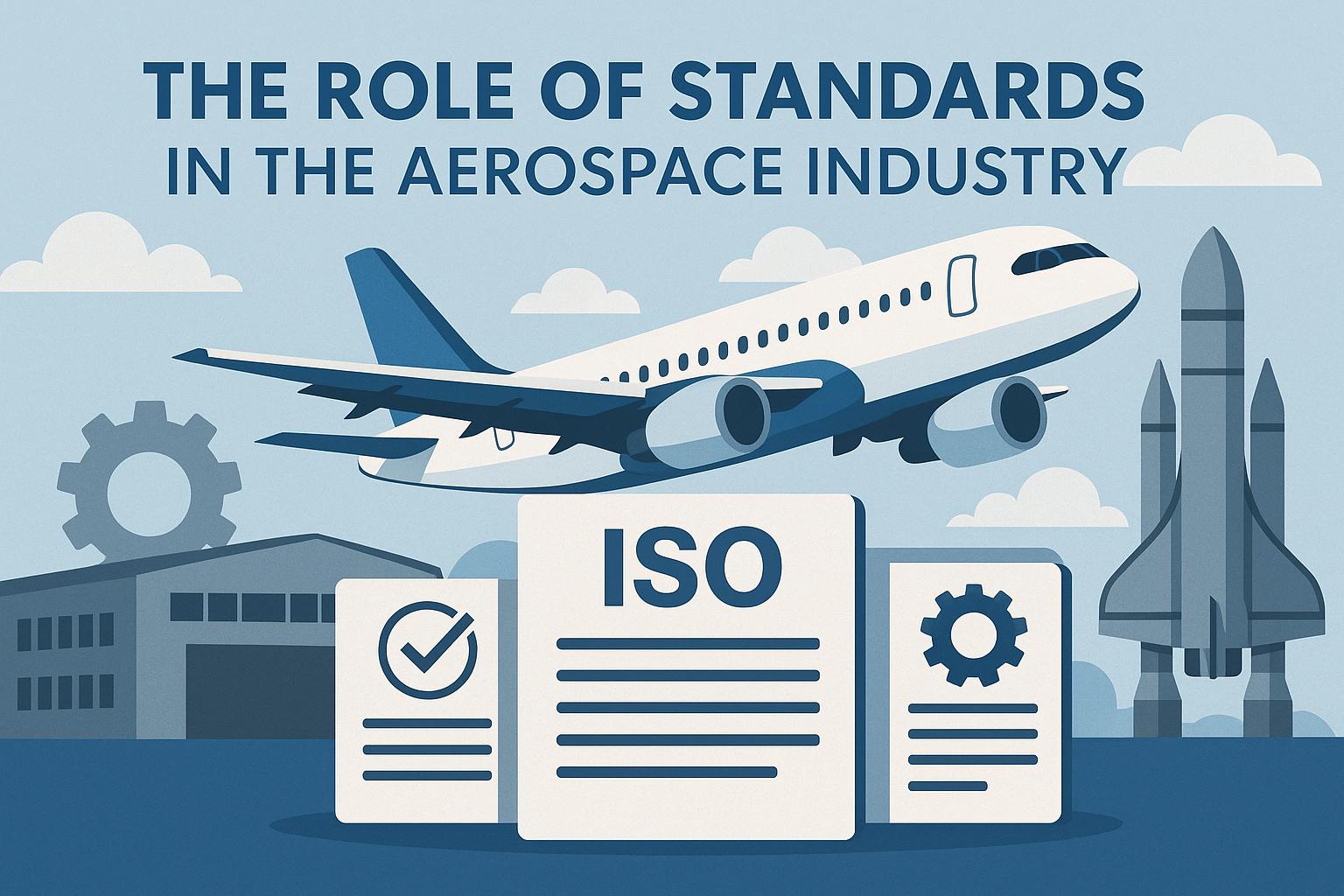
The Importance of Standards in Aerospace
In the aerospace industry, standards play a crucial role in ensuring safety, reliability, and interoperability. The sector is governed by a myriad of regulations and standards, each serving a specific purpose to maintain the delicate balance between innovation and safety. Unlike other industries, aerospace operates under strict scrutiny due to the inherent risks associated with flying.
Ensuring Safety and Reliability
The primary objective of standards in the aerospace sector is to ensure the safety and reliability of aircraft. These standards are developed by international organizations such as the International Civil Aviation Organization (ICAO) and the European Union Aviation Safety Agency (EASA). By adhering to these standards, manufacturers can minimize the risks associated with aircraft operations.
For instance, the AS9100 set of standards specifies requirements for a quality management system in the aviation, space, and defense industries. Compliance with AS9100 helps organizations ensure their products consistently meet customer and regulatory requirements, thereby enhancing safety and reliability. These requirements cover various aspects of production, from design to testing, and involve rigorous documentation and quality controls to ensure every component is fit for purpose.
Furthermore, safety mechanisms embedded in the standards assess how effectively aircraft can handle unforeseen situations or conditions. Regular updates to these standards ensure they reflect not just the current technological landscape but also accommodate historical data and analytics on previous mishaps or failures to avert similar incidents in the future.
Interoperability Across Global Markets
Another critical role of standards in aerospace is to support interoperability. As aircraft often operate internationally, it is essential that components and systems are compatible across different jurisdictions. Standards such as the AeroSpace and Defence Industries Association of Europe’s (ASD-STAN) publications facilitate this by providing guidelines that ensure components from different manufacturers and countries can work together seamlessly.
Interoperability also extends to communications systems, where standards ensure that pilots, air traffic controllers, and ground services can communicate effectively, regardless of where they are in the world. This is critically important in emergency situations where clear communication can make the difference between routine operations and severe incidents. Standards create a unified method of communication that transcends language barriers, thereby reducing the chance of miscommunications that could lead to operational failures.
Beyond communication, interoperability deals with ensuring that mechanical components can be easily replaced, serviced, or upgraded internationally. This becomes particularly relevant when considering the long lifecycle of aircraft and the likelihood of different components requiring attention across various countries over time. Harmonizing procedures for component certification and installation helps maintain consistent operational capabilities globally.
Facilitating Innovation and Efficiency
While safety is paramount, the aerospace industry is also characterized by rapid technological advancements. Standards help facilitate innovation by providing a common framework within which new technologies can be developed and implemented. This reduces the risk of incompatible systems and components, enabling new technologies to be integrated more seamlessly.
Moreover, standards establish a baseline of quality that innovators can build upon, pushing the industry forward while ensuring adherence to requisite safety and performance benchmarks. New entrants into the market often leverage these existing standards to fast-track their development process, which contributes to technological progress across the sector.
Furthermore, by standardizing certain processes and components, companies can reduce costs and increase efficiency. This is particularly important in an industry where small increases in efficiency can result in significant savings and environmental benefits. Efficiencies are gained through commonality, where parts and processes are streamlined to reduce redundancy and pervasive errors. In addition to cost savings, this enhances global supply chain resilience, which is crucial for timely manufacturing and maintenance operations.
Standing on the shoulders of standardized design, operational efficiency can significantly impact the competitive edge of aerospace companies. Time savings gained from efficient turnaround times, consistent quality checks, and predictable service schedules build trust and enhance the industry’s stature in the eyes of regulators and customers.
The Role of Industry Organizations
Industry organizations such as the International Organization for Standardization (ISO) and the Society of Automotive Engineers (SAE) are instrumental in developing and maintaining standards in the aerospace sector. They bring together experts from various fields to establish guidelines that are recognized and adopted globally.
These organizations regularly update standards to reflect technological advancements and new safety information. As such, staying current with industry standards is critical for aerospace companies to maintain competitiveness and compliance with regulatory requirements. They serve as repositories of knowledge that leverage collective industrial expertise, offering a broad spectrum of solutions that keep pace with the evolving landscape.
Industry bodies also serve to mediate between governments and firms, aligning diverse stakeholder interests towards coherent regulatory policies and implementing a global strategy that makes flight safer and more accessible. By benchmarking best practices, they ensure consistency in safety, production, and operational paradigms across regions, providing a shared roadmap for businesses large and small. Thus, standards are instrumental in fostering a robust aviation ecosystem with clear-cut guidelines for attaining excellence.
In conclusion, standards in the aerospace industry are vital for ensuring safety, promoting interoperability, fostering innovation, and improving efficiency. They serve as the backbone of an industry where precision and reliability are non-negotiable, facilitating a coordinated and safe global aviation system. By undergirding every component of the aerospace industry, standards assure that safety and performance go hand in hand with cost-efficient and environmentally conscious practices, making air travel a continuous beacon of human achievement.