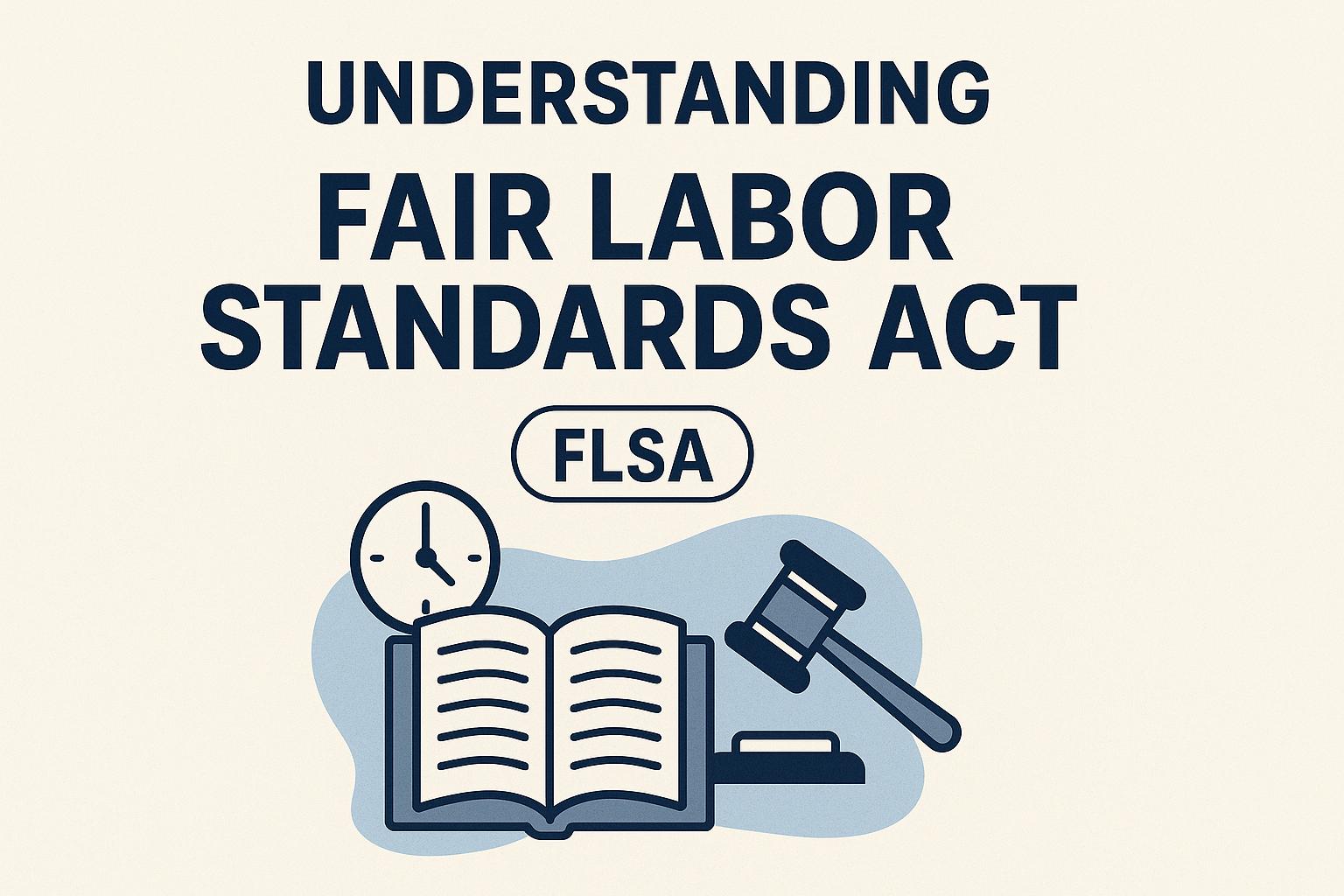
Introduction to the Fair Labor Standards Act (FLSA)
The Fair Labor Standards Act (FLSA) is a fundamental piece of legislation that was enacted in 1938 in the United States. This important federal law set forth essential standards regarding minimum wage, overtime pay, recordkeeping, and youth employment. The FLSA plays a vital role in shaping the labor landscape across the United States, affecting employees in both the private sector and those working in federal, state, and local governments. The U.S. Department of Labor (DOL) holds the responsibility for administering and enforcing the various provisions laid out by the FLSA.
Key Provisions of the FLSA
The FLSA is structured to shield workers from unjust pay practices and sets forth regulations in several critical areas, which include:
Minimum Wage, Overtime Pay, Recordkeeping, and Child Labor.
Minimum Wage Regulations
The legislation mandates that employers must pay a certain minimum wage to most workers. The federal minimum wage serves as the baseline; however, individual states have the discretion to enforce higher minimum wages than those mandated by the FLSA. It is crucial for employers to adhere to the standard that most benefits the employee. This alignment helps to protect workers from receiving inadequate compensation for their labor. For more detailed information about varying state-specific minimum wages, interested parties are encouraged to consult resources such as the U.S. Department of Labor’s website.
Overtime Pay Standards
Within the realm of compensation, the FLSA mandates that employees who are covered under the Act must be rewarded with overtime pay. This pay should be no less than one and one-half times the employee’s regular pay rate for any hours worked beyond the standard 40-hour workweek. This requirement aims to ensure fair compensation for the additional hours contributed by employees. Some exceptions are present in this aspect of the law, specifically for certain employees who hold exempt status from the overtime pay requirement. These exemptions can apply to various roles within an organization, typically encompassing executive, administrative, and professional employees. Understanding these distinctions is vital for both employers and employees to maintain compliance with the FLSA.
Recordkeeping Requirements
Compliance with the FLSA requires employers to maintain specific, accurate records pertaining to nonexempt employees. These records are crucial and should include details such as the number of hours worked by the employee, the wages paid, and personal information like the employee’s name and social security number. Such meticulous recordkeeping is fundamental in ensuring that the provisions of the FLSA are being adhered to and serves as a safeguard against potential disputes or misunderstandings regarding pay and employment conditions.
FLSA Coverage and Exemptions
While the FLSA encompasses a wide array of workers, it does not extend its coverage to every employee. Some workers are exempt from the FLSA’s stipulations regarding minimum wage and overtime protections. This exemption typically applies to executive, administrative, or professional employees who meet specific criteria. Additionally, employees operating within certain industries or engaged under particular contracts may not necessarily fall within the FLSA’s jurisdiction, and distinct regulatory frameworks might apply to them. Understanding the eligibility and exemptions under the FLSA is crucial for both employers and employees to ensure proper compliance and to avoid unintentional breaches of labor standards.
Enforcement of the FLSA
The responsibility for enforcing the provisions of the FLSA resides with the Wage and Hour Division of the U.S. Department of Labor. Should employees suspect that they have not been compensated correctly or that other FLSA provisions have been violated, they possess the right to file a complaint with the Department. The enforcement mechanisms established under the FLSA serve to protect workers from unfair labor practices and ensure that the standards outlined in the legislation are upheld. Employers found in violation of the FLSA may face legal penalties, which underscores the importance of both awareness and adherence to the law’s requirements.
Understanding the Implications of the FLSA
The Fair Labor Standards Act, by establishing clear guidelines for wages, working hours, and youth employment, serves as an essential framework for promoting equitable labor practices across a variety of industrial sectors. By advocating for fair compensation and safeguarding against exploitative labor conditions, the FLSA seeks to enhance the well-being and security of the workforce. It is imperative for employers to not only be aware of the FLSA’s provisions but also to diligently implement them within their business practices.
This understanding ensures that workers receive due compensation for their contributions and that businesses operate within the legal standards set forth by the legislation. On the flip side, employees should familiarize themselves with their rights under the FLSA to safeguard against potential violations and to assert their rightful claims in situations where discrepancies or breaches occur.
Conclusion
The Fair Labor Standards Act represents a cornerstone in the establishment and maintenance of fair labor standards within the United States. Through its comprehensive regulations on wages, hours, and youth employment, the FLSA aims to nurture equitable and just working environments. The ability of the FLSA to adapt to changes in economic and social conditions further enhances its relevance and effectiveness in safeguarding workers’ rights. Ultimately, the collaboration and adherence of both employers and employees to the FLSA’s principles is instrumental in achieving its overarching goal of promoting fair labor practices in all corners of the workforce.